JRready tools
JRready JRconDRK-N305170 Single-Pin Extraction Tool for Secondary Lock Terminals such as TE 2-968968-3 and 827603-1, in Automotive and Aerospace Maintenance
JRready JRconDRK-N305170 Single-Pin Extraction Tool for Secondary Lock Terminals such as TE 2-968968-3 and 827603-1, in Automotive and Aerospace Maintenance
Couldn't load pickup availability
JRconDRK-N305170
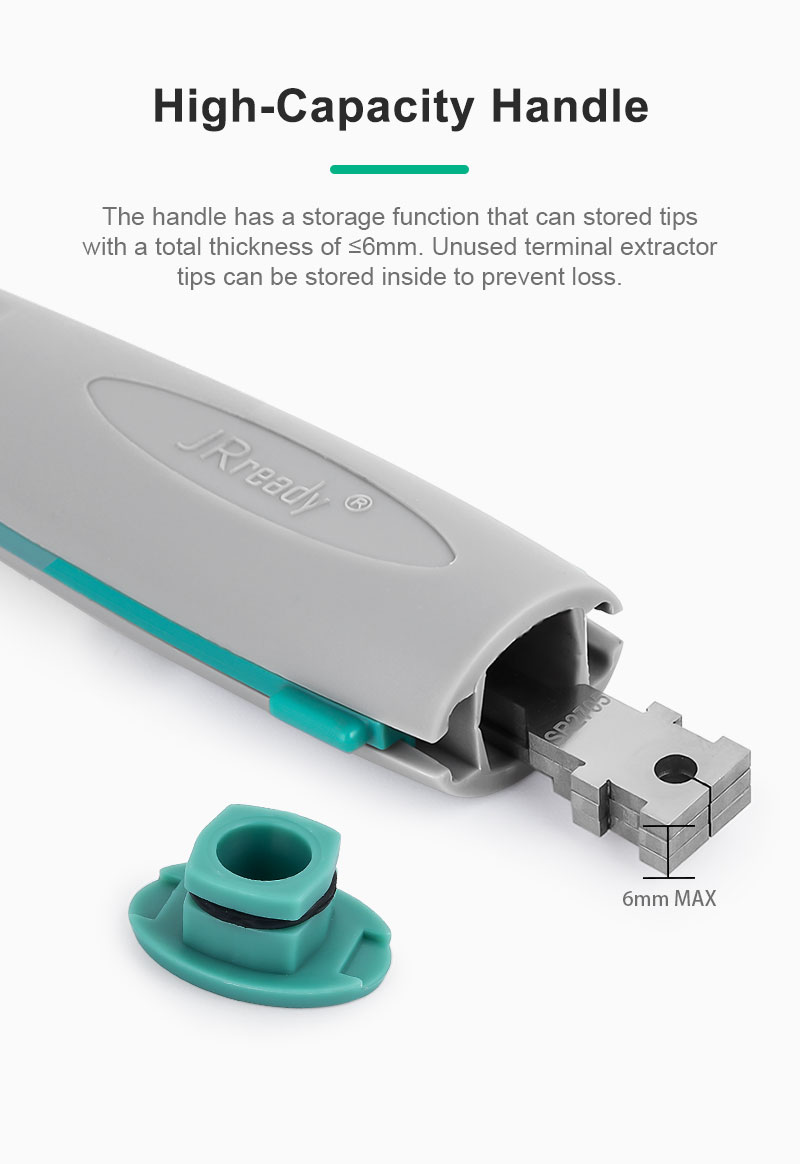
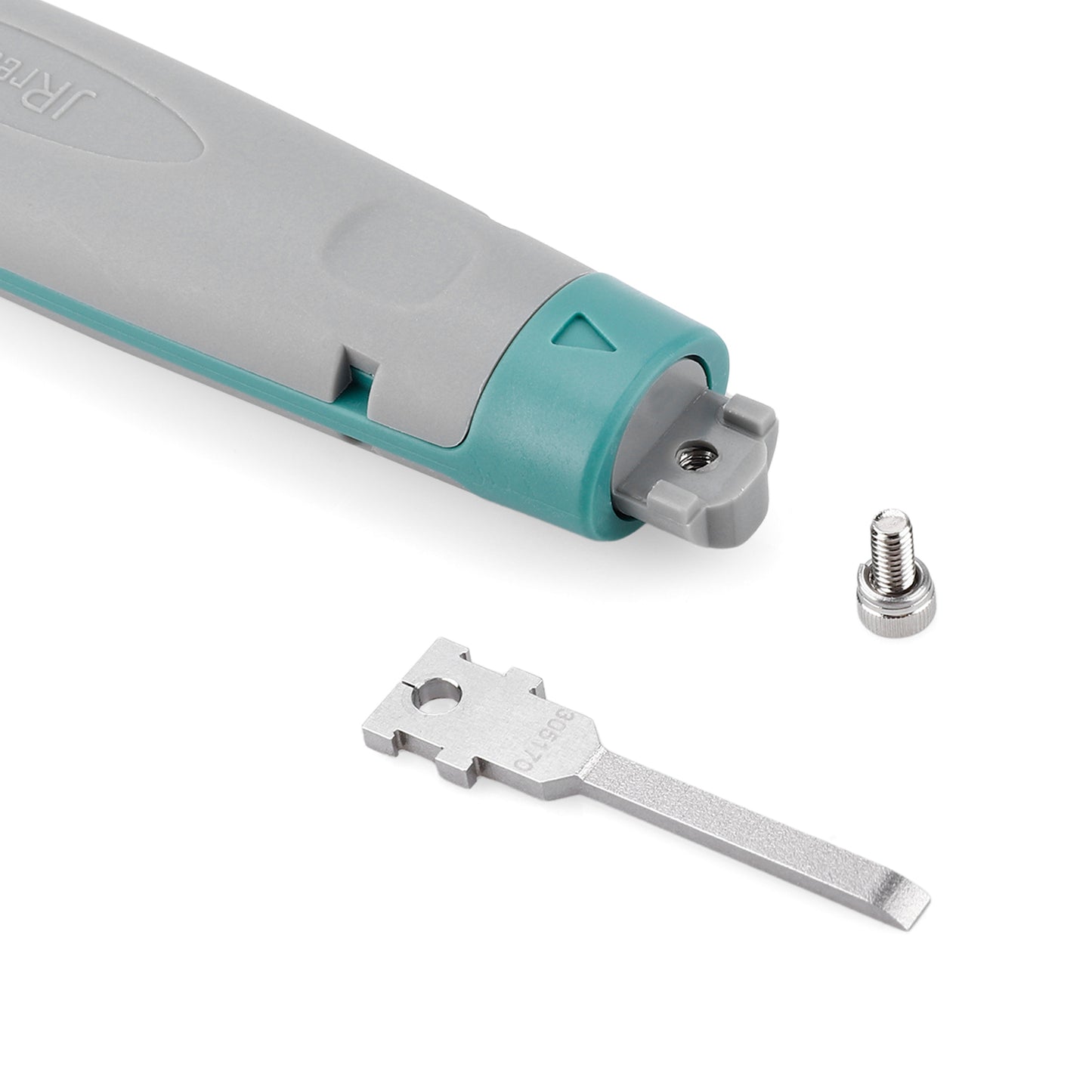
Ergonomic Nylon Handle with Built-in Storage
The JRconDRK-N305170 comes with a slim nylon plastic handle that is remarkably light at only 23g and sized at 125 × 27mm for easy handling. Its well-contoured shape delivers a secure and comfortable hold, enabling technicians to work with steady precision in narrow areas and during long repair sessions without unnecessary strain on the hands.
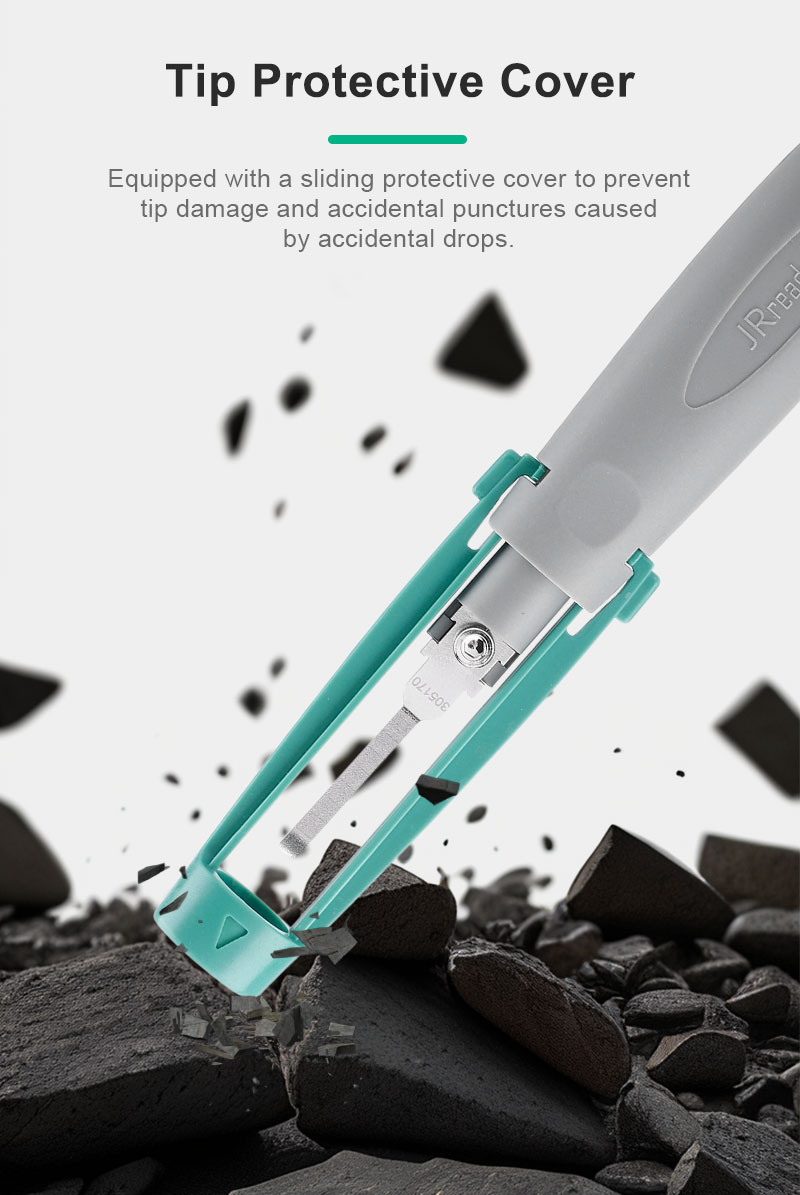
Sliding Protective Cover for Tip Safety
Equipped with a convenient sliding protective sleeve over the tip, this tool effectively guards against damage from accidental drops while also reducing the risk of unintended punctures or injury. The cover provides reliable protection without compromising quick access during operation.
Versatile Interchangeable Flat Blade System
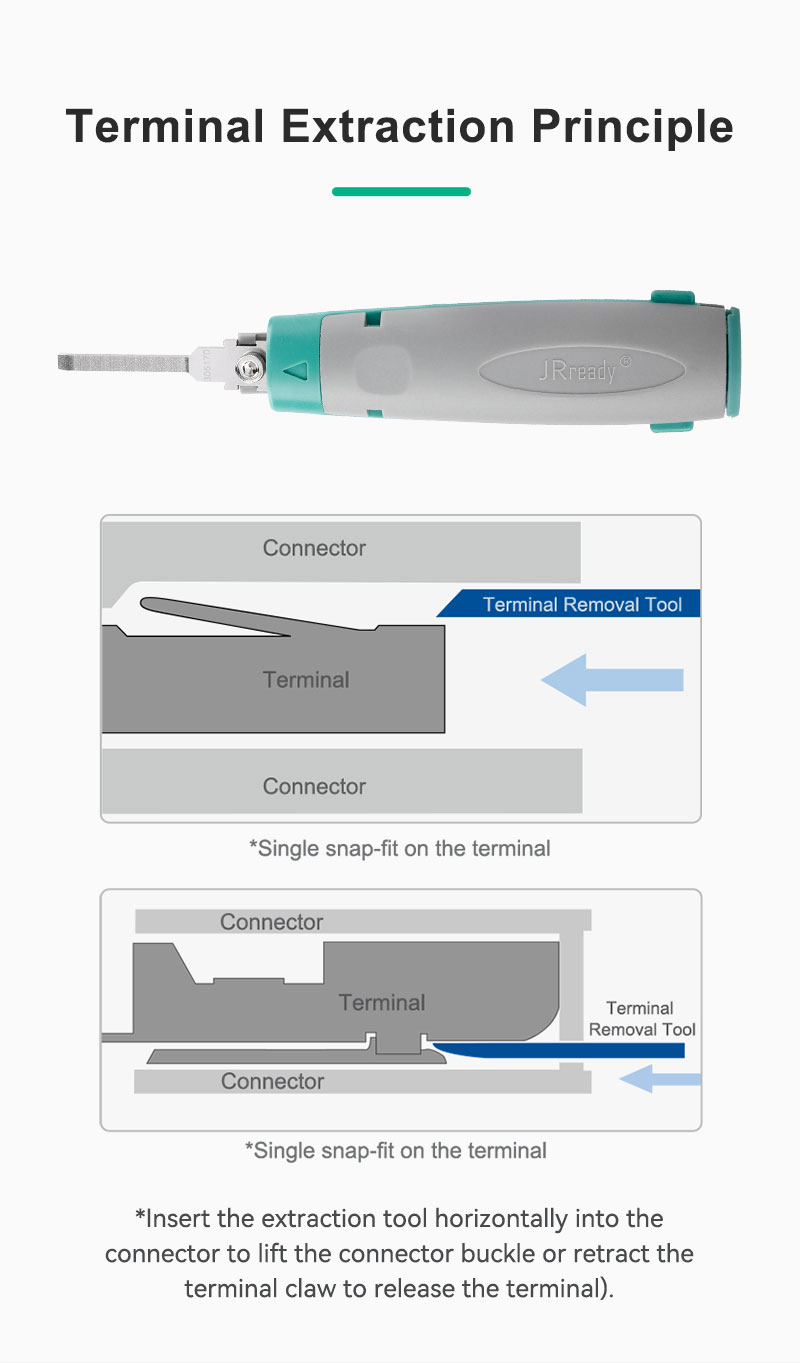
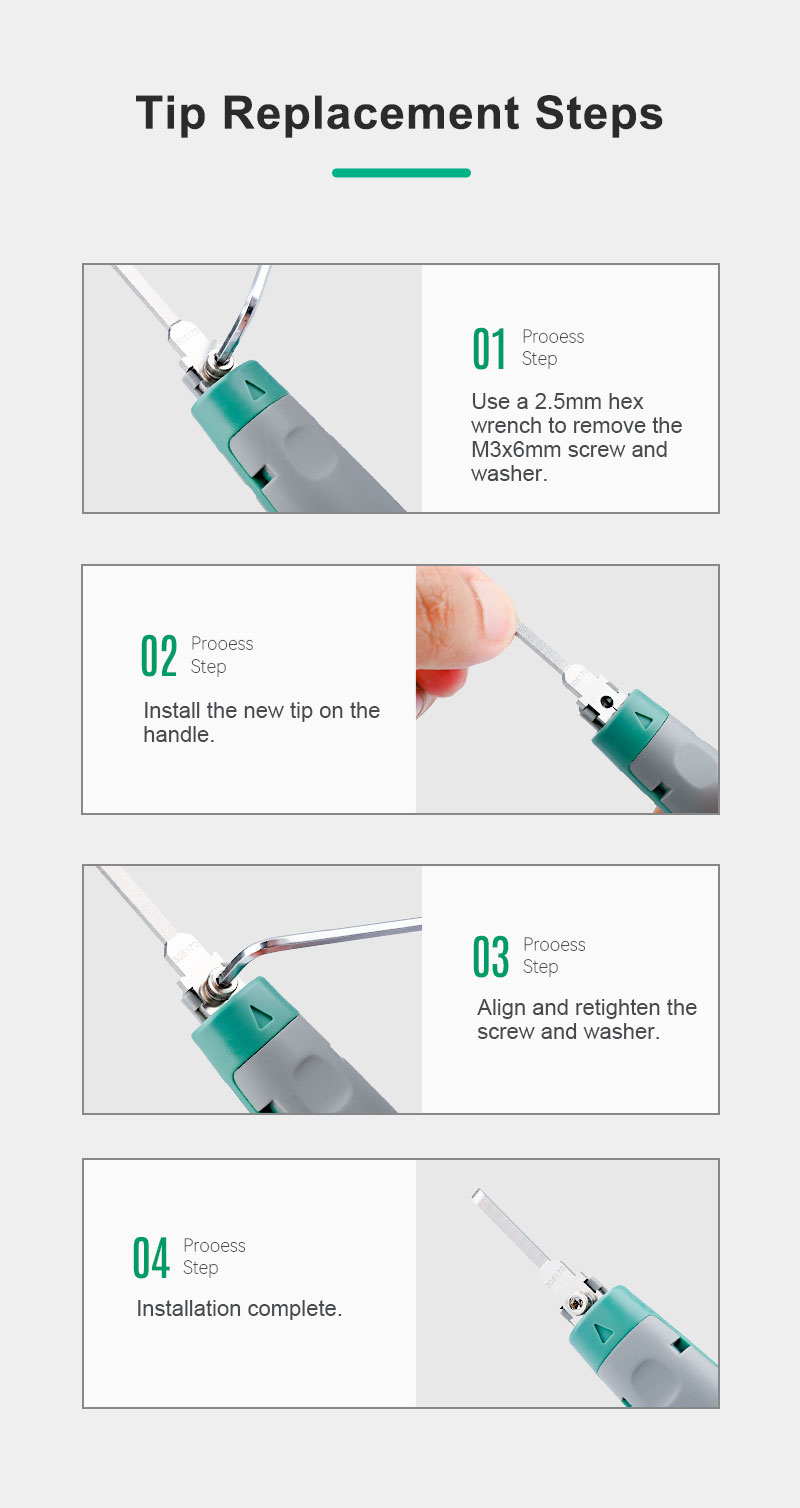
Featuring a flexible modular design, the tool supports quick changes between different flat blade tips to match various terminal types. This adaptability allows it to handle a broad range of secondary locking clip releases effectively, making it a versatile option for diverse connector configurations in automotive and industrial applications.
Broad Compatibility with Secondary Lock Terminals
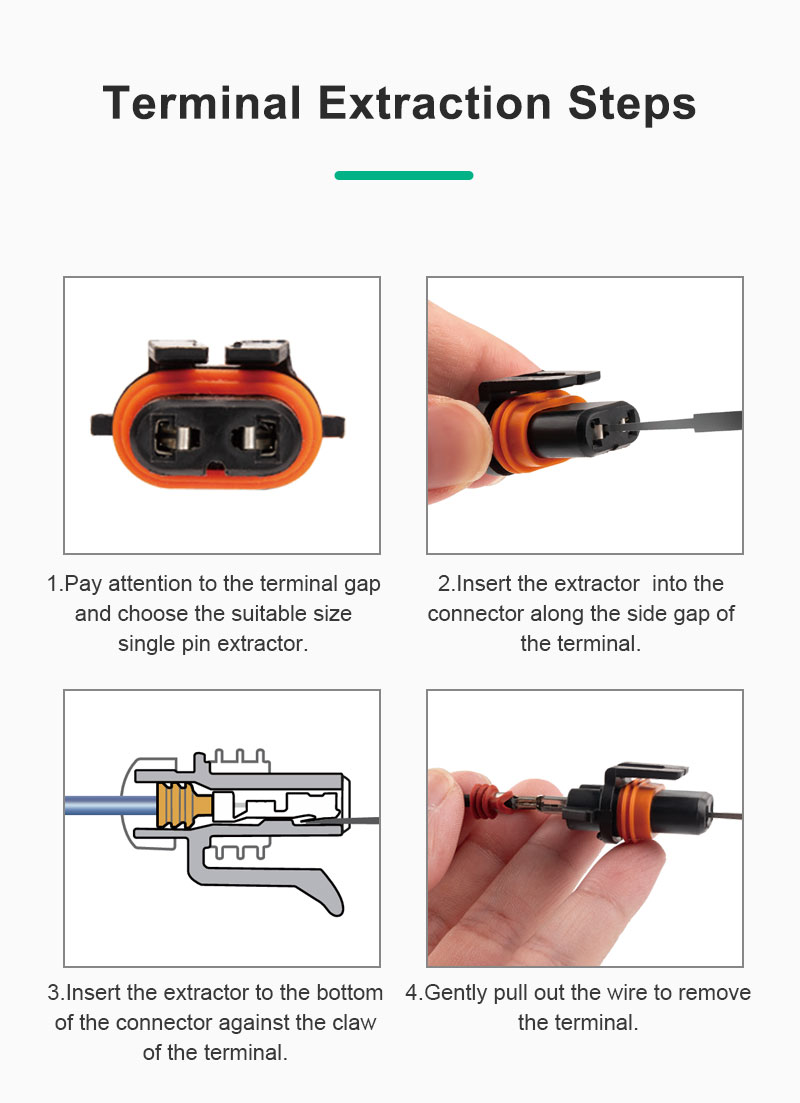
The tool is specifically engineered to release small secondary locking tabs in connectors such as TE 2-968968-3, 827603-1, 142681-1, 1-967086-1, and similar models containing auxiliary lock terminals, delivering precise and safe operation in complex harness assemblies.
Professional Extraction Tool for Automotive and Aerospace Wiring
A practical solution for technicians working on connector maintenance and terminal service in automotive electronics, aerospace systems, industrial machinery, and other applications involving secondary lock terminals. It improves efficiency and safety when handling delicate auxiliary lock mechanisms in high-reliability environments.